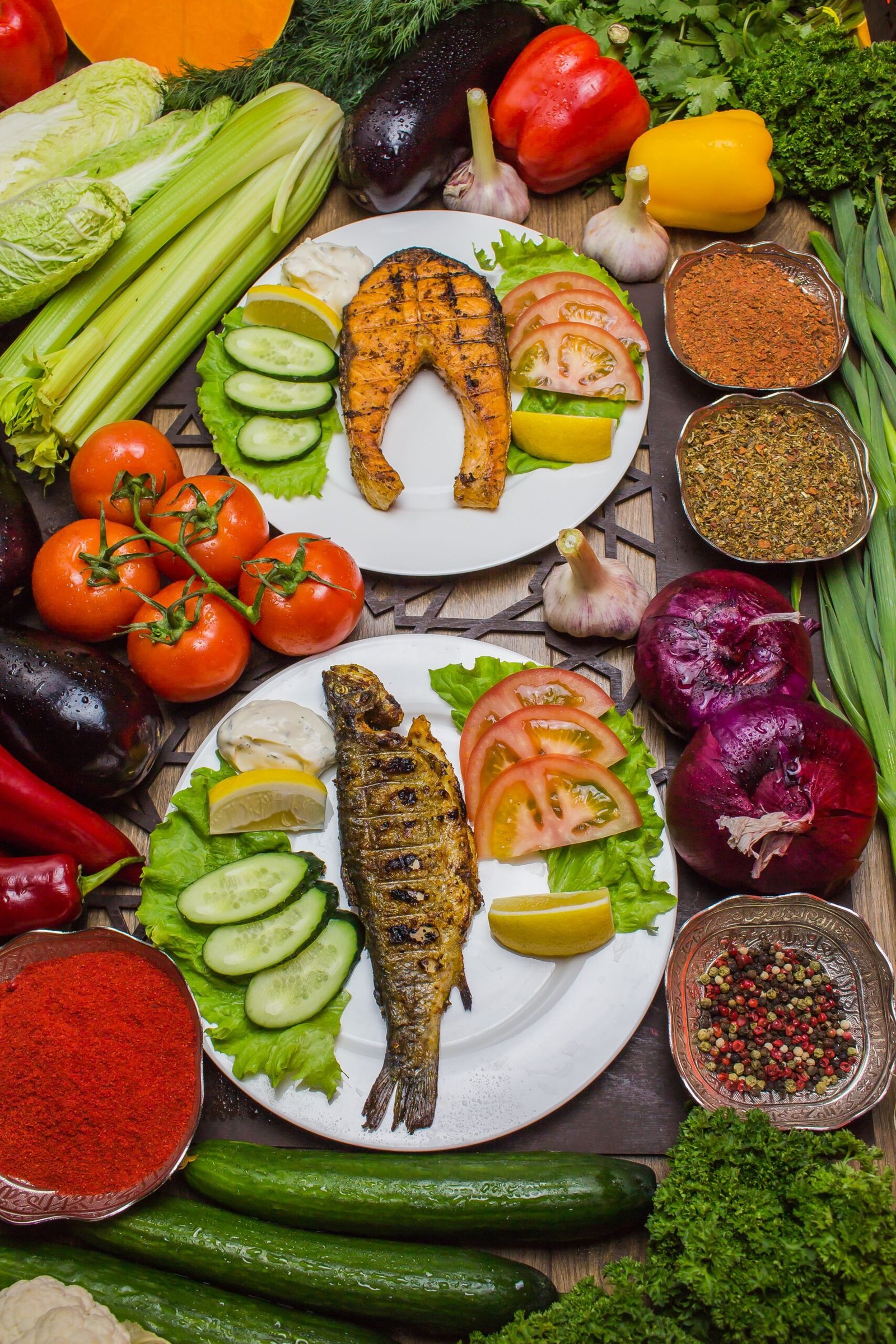

After years of on-and-off calorie counting and macro tracking, I got tired of the mental overhead and tried something simpler: just paying attention to what was actually on my plate, without measuring any of it. It sounded too basic to work. It ended up being more sustainable than anything I’d tracked with an app.
Why “Balanced” Doesn’t Need to Mean Complicated
Nutrition advice often gets buried in specifics — exact protein grams, precise ratios, detailed meal plans — which is useful for some goals but genuinely unnecessary for the basic question most people actually have: am I eating in a way that generally supports my health? A simple visual framework answers that question without requiring tracking anything.
The Basic Plate Framework
A widely used, simplified version looks roughly like this for a typical meal:
About half the plate: vegetables and fruit. This is the category most people undereat, and it’s also the one doing the most work for fiber, vitamins, and overall nutrient density.
About a quarter: protein. Meat, fish, eggs, legumes, tofu, or other protein sources — supports muscle maintenance and tends to increase fullness more than an equivalent amount of refined carbohydrate.
About a quarter: whole grains or starchy vegetables. Brown rice, whole wheat, potatoes, quinoa — the body’s primary energy source, ideally in less processed forms where practical.
A small amount of healthy fats, incorporated throughout — olive oil, nuts, avocado — rather than treated as a separate category to fear or avoid.
This isn’t a rigid rule to hit at every single meal — it’s a rough visual target that, applied loosely over most meals in a week, tends to produce a genuinely balanced overall diet without any counting at all.
Why This Worked Better for Me Than Tracking
Calorie and macro tracking requires ongoing mental effort — weighing food, logging entries, checking totals — which is sustainable for some people but became a source of low-grade stress for me, and eventually something I’d abandon during busy weeks, undoing whatever progress the tracking had built. The visual plate method requires a single glance at my plate before eating, which survives busy weeks in a way logging never did.
What Actually Changed on My Plate
The most noticeable shift wasn’t dramatic — it was that vegetables stopped being an afterthought. Once “half the plate” became the mental default, meals that used to be mostly a protein and a starch (chicken and rice, pasta with sauce) naturally gained a vegetable component, simply because the visual gap was obvious once I started looking for it.
Common Questions This Framework Doesn’t Answer (And That’s Okay)
This isn’t designed for specific goals like significant weight loss, athletic performance, or managing a medical condition — those situations often benefit from more precise guidance, ideally from a doctor or registered dietitian rather than a general framework. This is specifically a starting point for people who want a generally healthier default without adopting a strict tracking system.
Making It Realistic, Not Perfect
Restaurant and takeout meals won’t fit neatly — that’s fine. The framework is most useful for meals you’re actually preparing or have some control over, applied loosely rather than anxiously.
Breakfast often looks different — a rigid quarter-quarter-half split rarely applies well to breakfast foods. The underlying principle (some protein, some produce if possible, not purely refined carbohydrates) still applies even when the visual proportions look different.
This pairs naturally with mindful eating — eating slowly enough to actually notice what’s on your plate is part of what makes a framework like this practical to apply consistently, rather than just a chart you remember exists but don’t actually use.
The Bottom Line
A generally balanced plate doesn’t require tracking, counting, or precision — a rough visual habit (roughly half produce, a quarter protein, a quarter whole grains, healthy fats throughout) applied loosely across most meals tends to produce real, sustainable improvement without the mental overhead that makes more precise tracking systems hard to maintain long-term.



[…] rest day isn’t a reason to abandon every other healthy habit — hydration, reasonable eating, and sleep all still matter on a rest day, arguably more so, since they directly support the […]
[…] (Related: my article on building a balanced plate covers the specifics without turning it into a die… […]